 Send Inquiry
 08045800354

 Send Inquiry
Chemical Centrifugal Process Pumps
MOQ : 1 Set
Chemical Centrifugal Process Pumps Specification
- Features
- Corrosion Resistant, High Efficiency, Interchangeable Parts
- Theory
- Centrifugal Pump
- Max Suction
- Up to 8 meters
- Frequency
- 50/60 Hz
- Working Temperature
- Up to 120C
- Discharge Pressure
- Up to 10 bar
- Head Size
- Up to 100 meters
- Flow Rate
- Up to 200 m/hr
- Noise Level
- Below 70 dB(A)
- Voltage
- 230/415 V
- Mounting Type
- Baseplate Mounted
- Speed
- 2900/1450 RPM
- Caliber
- Standard as per model
- Inlet/Outlet
- 25 mm to 100 mm
- Power
- 0.5 HP to 30 HP
- Standard
- ISO 5199 / DIN 24256
- Fuel Type
- Electric
- Pressure
- Max. 10 Bar
- Usage
- Chemical Process Handling
- Application
- Chemical, Petrochemical, Effluent Treatment, Water, Pharmaceuticals
- Suction Type
- Single stage
- Seals Type
- Mechanical Seal / Gland Packing
- Priming
- Self / Manual Priming
- Pump Type
- Centrifugal Process Pump
- Capacity
- Up to 200 m/hr
Chemical Centrifugal Process Pumps Trade Information
- Minimum Order Quantity
- 1 Set
- Supply Ability
- 100 Sets Per Day
- Delivery Time
- 1-12 Week
About Chemical Centrifugal Process Pumps
We have obtained the market knowledge and techniques to manufacture, supply and export Chemical Pump. These products are used in different refineries and chemical processing units to maintain a constant and high pressure flow of varied hazardous liquids. Known for their resistance against corrosion and chemicals, these products have gained a high demand among our clients worldwide. Owing to our expert delivery team, we are able provide the clients with the quick delivery of Chemical Transfer Pump.
Engineered for Chemical Process Efficiency
Our centrifugal process pumps are designed to handle aggressive chemicals and challenging process fluids across multiple industries. The robust design meets international standards for safety and reliability, making them suitable for continuous operation in demanding environments such as chemical, petrochemical, water treatment, and pharmaceuticals. Their versatility and efficiency enhance process productivity while reducing the maintenance burden.
Adaptable Performance Across Applications
With a broad capacity range, these pumps support flow rates up to 200 m/hr and heads up to 100 meters. Their flexible priming (self or manual), single-stage suction, and baseplate-mounted construction enable easy integration into various setups. The interchangeable parts and corrosion-resistant materials ensure minimal downtime and long service life, making them a valuable asset for process industry operators.
FAQs of Chemical Centrifugal Process Pumps:
Q: How does the chemical centrifugal process pump ensure safe handling of corrosive fluids?
A: The pump features corrosion-resistant materials and is designed according to ISO 5199 and DIN 24256 standards, making it suitable for handling corrosive chemicals safely in industrial environments. Options for mechanical seal or gland packing further minimize leakage, offering enhanced protection.Q: What applications are these pumps most suitable for?
A: These pumps are ideal for chemical, petrochemical, effluent treatment, pharmaceutical, and water-related processes. Their construction and performance parameters make them especially suited for moving aggressive fluids and process chemicals safely and efficiently.Q: When should I select self-priming over manual priming for my process?
A: Self-priming is recommended when the pump needs to operate in systems where the suction line may not always be fully primed with liquid. This feature provides easier startup and operational flexibility compared to manual priming, which requires the user to fill the suction line manually before each startup.Q: Where can these pumps be installed for optimum performance?
A: For reliable operation, install the pump on a solid, level baseplate near the fluid source. Ensure sufficient clearance for air flow and maintenance access. Placement in well-ventilated, dry environments further supports long-term reliability.Q: What is the process of maintaining these centrifugal pumps?
A: Routine maintenance includes checking for seal integrity, inspecting for corrosion, and ensuring bolts and couplings are secure. The interchangeable part design simplifies repairs and replacements, helping minimize unplanned downtime and optimize operational efficiency.Q: What are the key benefits of using these pumps in industrial applications?
A: Key benefits include high efficiency, compatibility with a wide range of chemicals, standardized dimensions, low noise levels, and easy integration. The robust design extends pump life, reduces energy consumption, and lowers operational costs for process industries.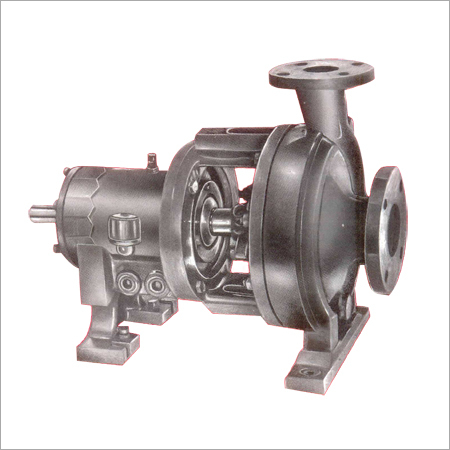
Tell us about your requirement

Price:
Quantity
Select Unit
- 50
- 100
- 200
- 250
- 500
- 1000+
Additional detail
Mobile number
Email

More Products in Chemical Process Pumps Category
Vertical Sump Pumps
Minimum Order Quantity : 1 Set
Usage : Other, Industrial/Commercial/Liquid Transfer
Material : Cast Iron, Stainless Steel, Alloy, or Polypropylene
Control System : Manual/Automatic
Frequency : 50 Hz / 60 Hz
Max Suction : Up to 7 meters
Chemical Process Pumps
Minimum Order Quantity : 1 Set
Usage : Other, Chemical Handling
Material : Polypropylene / Stainless Steel / Cast Iron / Alloy
Control System : Manual / Automatic
Frequency : 50 Hz / 60 Hz
Max Suction : Up to 8 m
High Temperature Centrifugal Pump
Minimum Order Quantity : 1 Set
Usage : Other, Industrial
Material : Cast Iron / Stainless Steel
Control System : Manual / Automatic
Frequency : 50 Hz
Max Suction : 8 Meter
Slurry Pumps
Minimum Order Quantity : 1 Set
Usage : Other, Industrial Slurry Handling
Material : High Chrome Alloy / Cast Iron
Control System : Manual/Electrical
Frequency : 50 Hz
Max Suction : 7 meters

C. P. V. ENGINEER PVT. LTD.
GST : 29AACCC5393D1ZM
GST : 29AACCC5393D1ZM
Contact Details
- N-27, Industrial Estate, 1st Main, 1st Gate, Gokul Road, Opp. New Bus Stand, Hubli - 580030, Karnataka, India
- Phone : 08045800354
- Mr D. Jai Singh (Managing Director)
- Mobile : 08045800354
- Send Inquiry
 Send Inquiry
 |
C.P.V. ENGINEER PVT. LTD.
All Rights Reserved.(Terms of Use) Developed and Managed by Infocom Network Private Limited. |
